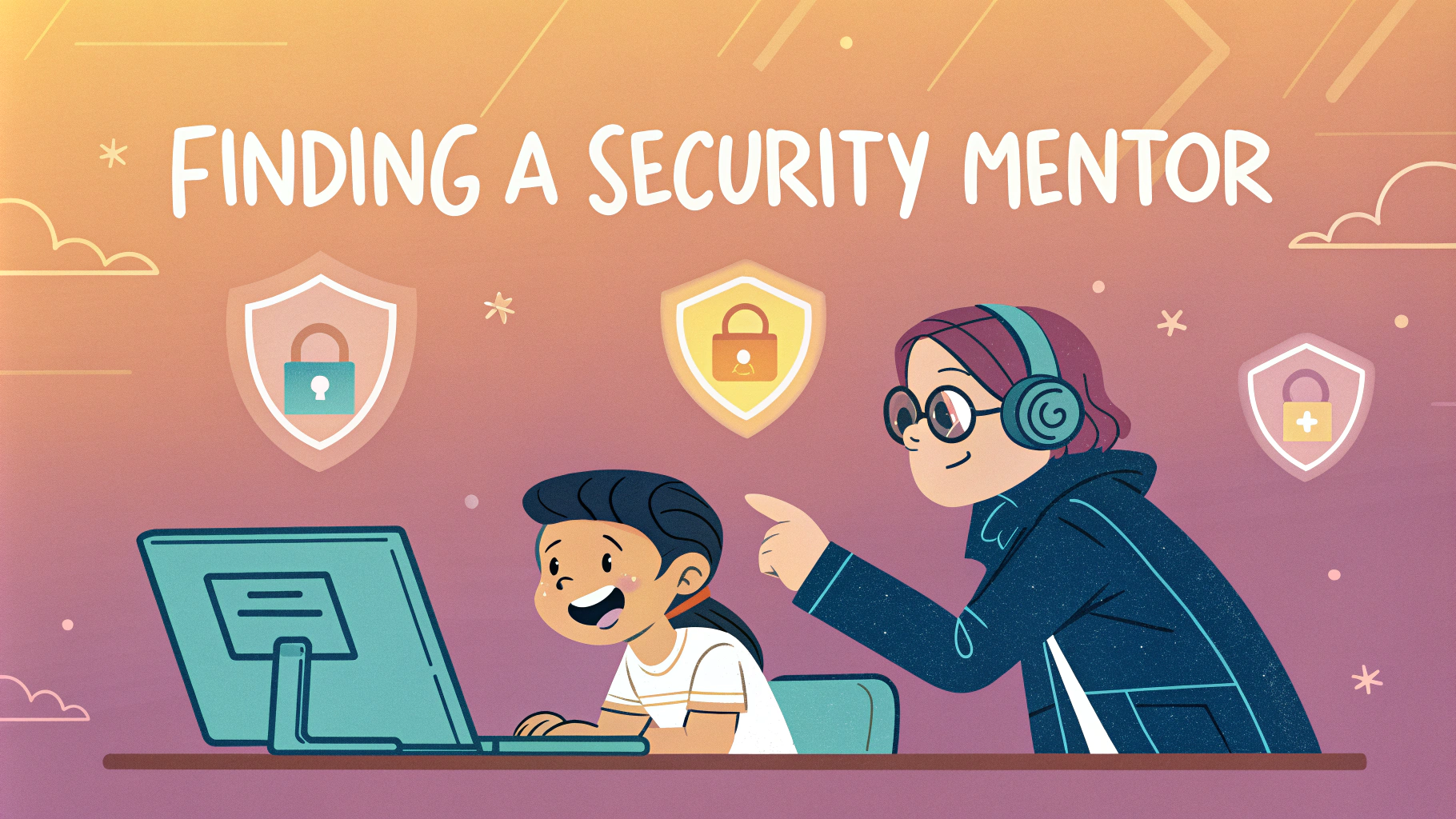
Finding a Security Mentor
Finding the right security mentor can accelerate your penetration testing career and help you avoid common pitfalls while learning ethical hacking. A
Finding a Security Mentor
Finding the right security mentor can accelerate your penetration testing career and help you avoid common pitfalls while learning ethical hacking.
A good mentor provides personalized guidance, shares real-world experiences, and helps develop both technical skills and professional judgment needed in the cybersecurity field.
This guide outlines practical steps to find and connect with experienced penetration testers who can mentor you, along with tips to make the most of the mentoring relationship.
Where to Find Security Mentors
- Local Security Groups: Join OWASP chapters and local security meetups
- Online Communities: Participate in HackTheBox, TryHackMe, and VulnHub forums
- Professional Networks: Connect through LinkedIn and InfoSec Discord servers
- Security Conferences: Attend BSides events, DEF CON, and BlackHat
- Educational Programs: Engage with instructors in cybersecurity certification courses
Approaching Potential Mentors
Start by following their work, blog posts, or contributions to open-source projects before making contact.
Show genuine interest in their expertise area by asking specific, well-researched questions.
Offer value in return – whether through helping with documentation, research, or other projects.
Qualities to Look for in a Security Mentor
- Active involvement in the security community
- Teaching experience or demonstrated knowledge sharing
- Ethical approach to penetration testing
- Clear communication skills
- Willingness to provide constructive feedback
Making the Most of Mentorship
- Set clear goals and expectations from the start
- Prepare specific questions for each meeting
- Document lessons learned and follow up on suggestions
- Share your progress and challenges regularly
- Respect their time and maintain professional boundaries
Online Mentorship Programs
Program
Focus Area
Cost
SANS Mentor Program
Technical Skills
Paid
HTB Academy
Practical Labs
Freemium
OWASP Mentors
Web Security
Free
Building Long-term Professional Relationships
Keep in touch even after formal mentorship ends through occasional updates or sharing relevant resources.
Consider transitioning from mentee to peer as your skills develop.
Look for opportunities to mentor others once you’ve gained experience.
Next Steps in Your Security Journey
Start by joining the InfoSec community on Twitter (X) and LinkedIn using hashtags #infosec and #bugbounty.
Contribute to security discussions on platforms like Reddit’s r/netsec and Stack Exchange.
Remember that finding the right mentor takes time – focus on building genuine connections rather than rushing into formal arrangements.
Common Mentorship Challenges
- Time zone differences and scheduling conflicts
- Maintaining consistent communication
- Different expectations about pace and progress
- Balancing mentorship with other commitments
- Dealing with imposter syndrome
Remote Mentorship Best Practices
Use video calls for detailed technical discussions and screen sharing sessions.
Maintain a shared document or wiki to track progress and discussion points.
Schedule regular check-ins at consistent times.
Recommended Tools
- Discord for quick communications
- Google Meet or Zoom for video sessions
- GitHub for code reviews and projects
- Notion or Wiki for documentation
Measuring Mentorship Success
- Achievement of defined learning objectives
- Completion of practical projects
- Growth in technical capabilities
- Expanded professional network
- Increased confidence in security testing
Advancing Your Security Career Path
Track your progress through a personal development plan.
Build a portfolio of ethical hacking projects and write-ups.
Stay connected with the security community through continuous learning and knowledge sharing.
Empowering Future Security Leaders
Transform your mentorship experience into actionable insights for others.
Consider creating learning resources based on your journey.
Remember that today’s mentee is tomorrow’s mentor – your growth contributes to the entire security community.
FAQs
- What qualities should I look for in a security mentor for penetration testing?
A good security mentor should have proven experience in penetration testing, strong ethical principles, technical expertise in various tools and methodologies, excellent communication skills, and a willingness to share knowledge. - Where can I find potential security mentors in the penetration testing field?
You can find mentors through professional networks like LinkedIn, security conferences (DefCon, Black Hat), local security meetups, online communities (Reddit’s r/netsec), professional organizations (OWASP), and cybersecurity training platforms. - How important are certifications when selecting a mentor?
While certifications like OSCP, CEH, or SANS credentials can indicate expertise, they shouldn’t be the sole criteria. Real-world experience, track record, and teaching ability are equally important factors. - Should I pay for mentorship in penetration testing?
While some mentorship relationships are free, paid mentorship can provide structured learning and dedicated time. Both arrangements can be effective, depending on the mentor’s expertise and your learning goals. - What should be discussed in the first meeting with a potential security mentor?
Cover your current skill level, learning objectives, time commitment expectations, communication preferences, ethical boundaries, and specific areas of penetration testing you want to focus on. - How long should a mentorship relationship last in penetration testing?
Mentorship can range from 3 months to several years, depending on your goals. Short-term mentorship might focus on specific skills, while long-term relationships can guide career development. - What are the red flags to watch out for when choosing a security mentor?
Be wary of mentors who promote illegal activities, lack verifiable experience, are unwilling to provide references, show unprofessional behavior, or pressure you into financial commitments. - How can I make the most of my mentorship relationship?
Come prepared to meetings, actively practice skills, complete assigned tasks, ask meaningful questions, document your learning, and maintain regular communication with your mentor. - What specific areas should a penetration testing mentor help with?
A mentor should guide you through methodology, tool usage, report writing, client communication, legal compliance, exploit development, vulnerability assessment, and career advancement opportunities. - Should my mentor specialize in specific types of penetration testing?
It’s beneficial if your mentor’s expertise aligns with your interests (web app, network, mobile, IoT), but broad knowledge can provide valuable perspective across different specializations.

Author: Editor

March 2, 2025
Related Posts
Tool Documentation Standards
documentation standards
Documentation standards ensure consistency, clarity, and effectiveness when recording findings during penetration testing engagements. Proper documentation helps security teams track vulnerabilities, communicate issues to stakeholders, and maintain an audit trail ... Read more
Testing Tool Integration
tool integration
Testing tool integration is a critical aspect of cybersecurity assessment that combines various security testing tools to create a more robust and comprehensive penetration testing workflow. Security professionals need efficient ... Read more
Automation Framework Design

automation framework
An automation framework streamlines and standardizes penetration testing processes, making security assessments more efficient and repeatable. Properly designed frameworks reduce manual effort while maintaining testing quality and consistency across different ... Read more
Exploitation Tool Development
tool development
Penetration testing tools require careful development to effectively identify security vulnerabilities in systems and networks. Security professionals need specialized exploitation tools that can safely simulate real-world attacks without causing damage. ... Read more
Security Tool Architecture
tool architecture
Security tool architecture forms the backbone of effective penetration testing, enabling security professionals to systematically probe systems for vulnerabilities. A well-structured security testing toolkit combines reconnaissance tools, vulnerability scanners, exploitation ... Read more
Build Server Security
build security
Security testing of build servers protects the foundation of software development and deployment processes from potential threats and vulnerabilities. Build servers handle sensitive data, access credentials, and control deployment pipelines, ... Read more
Secret Management
secrets management
Secret management stands as a cornerstone of cybersecurity, particularly during penetration testing operations where handling sensitive data requires meticulous care and precision. Penetration testers must safeguard various types of secrets ... Read more
Deployment Security

deployment security
Penetration testing during deployment phases helps organizations identify security vulnerabilities before applications go live. Security teams use automated and manual testing methods to simulate real-world attacks against newly deployed systems ... Read more