
Network Pivoting Techniques
Network pivoting allows penetration testers and security professionals to move laterally through networks by leveraging compromised systems as jump ho
Network Pivoting Techniques
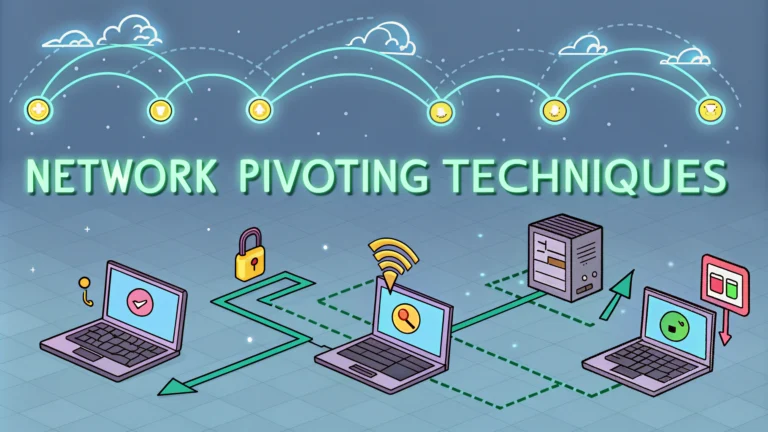
Network pivoting allows penetration testers and security professionals to move laterally through networks by leveraging compromised systems as jump hosts.
Understanding pivoting techniques is essential for security assessments that require accessing segmented networks and mapping attack paths across complex infrastructure.
This guide explains key pivoting methods, tools and best practices for ethical network traversal during authorized penetration tests.
Common Pivoting Techniques
- SSH Tunneling – Creates encrypted tunnels between systems using the SSH protocol
- SOCKS Proxy – Enables traffic routing through intermediary systems
- Port Forwarding – Redirects traffic from one port to another across network segments
- VPN Pivoting – Establishes virtual private network connections through compromised hosts
Essential Pivoting Tools
- Metasploit – Framework with built-in pivoting capabilities via route command
- Proxychains – Forces applications to use SOCKS/HTTP proxies
- Chisel – Fast TCP/UDP tunnel over HTTP
- SSHuttle – Transparent proxy server that works over SSH
- Ligolo-ng – Advanced pivoting tool with encrypted communications
SSH Tunneling Examples
Local port forwarding: ssh -L 8080:internal-server:80 pivot-host
Dynamic port forwarding: ssh -D 1080 pivot-host
Remote port forwarding: ssh -R 8080:localhost:80 pivot-host
SOCKS Proxy Setup
- Create SOCKS proxy on compromised host using SSH:
ssh -D 1080 user@pivot-host - Configure proxychains.conf to use SOCKS proxy
- Route tools through proxy:
proxychains nmap target-ip
Best Practices for Network Pivoting
- Document all pivoting paths and accessed systems
- Use encrypted protocols when possible
- Clean up tunnels and forwarded ports after testing
- Monitor bandwidth usage to avoid detection
- Test pivoting chains before full engagement
Common Challenges and Solutions
Challenge
Solution
Firewall Restrictions
Try alternative ports (80,443) or protocols
Network Latency
Use lightweight tools and compress traffic
Connection Drops
Implement automatic reconnection scripts
Limited Privileges
Leverage unprivileged port forwarding
Taking Your Skills Further
Practice pivoting techniques in controlled lab environments like Hack The Box or VulnHub.
Join professional communities like Offensive Security for advanced training.
Keep up with new pivoting tools and techniques through security blogs and conferences.
Advanced Pivoting Scenarios
Multi-Host Pivoting
- Chain multiple pivot points together for deeper network access
- Combine different tunneling techniques
- Use visualization tools to map complex pivot paths
Container Pivoting
- Leverage container escape techniques
- Pivot between containerized environments
- Exploit container networking features
Defense Evasion During Pivoting
- Use encrypted channels to avoid detection
- Implement traffic throttling
- Match normal network patterns
- Rotate ports and protocols regularly
Reporting and Documentation
- Create detailed network maps showing pivot paths
- Document successful techniques for future reference
- Record system dependencies and configurations
- Include cleanup procedures in reports
Mastering Network Traversal
Network pivoting remains a critical skill for security professionals. Success requires:
- Deep understanding of network protocols
- Proficiency with multiple pivoting tools
- Regular practice in lab environments
- Adherence to ethical guidelines and scope
- Continuous learning of new techniques
Remember to always operate within authorized boundaries and maintain proper documentation throughout testing engagements.
FAQs
- What is network pivoting in penetration testing?
Network pivoting is a technique where an attacker uses a compromised system as a stepping stone to access other systems or networks that are otherwise inaccessible directly. - What are the common tools used for network pivoting?
Popular pivoting tools include Metasploit’s autoroute and port forwarding, Proxychains, SSH tunneling, Chisel, Ligolo-ng, and SOCKS proxies. - What is the difference between port forwarding and tunneling?
Port forwarding redirects traffic from one port to another, while tunneling encapsulates one protocol within another to bypass network restrictions or create encrypted communication channels. - How does SSH tunneling work in network pivoting?
SSH tunneling creates an encrypted channel between two systems, allowing traffic to be forwarded through the tunnel using local, remote, or dynamic port forwarding options. - What is a SOCKS proxy and how is it used in pivoting?
SOCKS is a protocol that routes network packets between a client and server through a proxy server, allowing access to internal networks while masking the original source. - What are the risks of leaving pivot points exposed?
Exposed pivot points can lead to unauthorized network access, data breaches, lateral movement within networks, and potential compromise of additional systems. - How can defenders detect network pivoting attempts?
Defenders can monitor unusual network traffic patterns, unexpected outbound connections, abnormal port usage, and implement network segmentation and IDS/IPS systems. - What is double pivoting?
Double pivoting involves using two or more compromised hosts as relay points to reach deeper network segments that are multiple hops away from the initial entry point. - What role does Meterpreter play in network pivoting?
Meterpreter provides built-in pivoting capabilities through commands like ‘route’ and ‘portfwd’, allowing seamless network pivoting within the Metasploit framework. - How does network segmentation affect pivoting techniques?
Network segmentation creates barriers between different network segments, requiring attackers to identify and exploit multiple pivot points to traverse between segments.

Author: Editor

January 23, 2025
Related Posts
Tool Documentation Standards
documentation standards
Documentation standards ensure consistency, clarity, and effectiveness when recording findings during penetration testing engagements. Proper documentation helps security teams track vulnerabilities, communicate issues to stakeholders, and maintain an audit trail ... Read more
Testing Tool Integration
tool integration
Testing tool integration is a critical aspect of cybersecurity assessment that combines various security testing tools to create a more robust and comprehensive penetration testing workflow. Security professionals need efficient ... Read more
Automation Framework Design

automation framework
An automation framework streamlines and standardizes penetration testing processes, making security assessments more efficient and repeatable. Properly designed frameworks reduce manual effort while maintaining testing quality and consistency across different ... Read more
Exploitation Tool Development

tool development
Penetration testing tools require careful development to effectively identify security vulnerabilities in systems and networks. Security professionals need specialized exploitation tools that can safely simulate real-world attacks without causing damage. ... Read more
Security Tool Architecture

tool architecture
Security tool architecture forms the backbone of effective penetration testing, enabling security professionals to systematically probe systems for vulnerabilities. A well-structured security testing toolkit combines reconnaissance tools, vulnerability scanners, exploitation ... Read more
Build Server Security

build security
Security testing of build servers protects the foundation of software development and deployment processes from potential threats and vulnerabilities. Build servers handle sensitive data, access credentials, and control deployment pipelines, ... Read more
Secret Management

secrets management
Secret management stands as a cornerstone of cybersecurity, particularly during penetration testing operations where handling sensitive data requires meticulous care and precision. Penetration testers must safeguard various types of secrets ... Read more
Deployment Security

deployment security
Penetration testing during deployment phases helps organizations identify security vulnerabilities before applications go live. Security teams use automated and manual testing methods to simulate real-world attacks against newly deployed systems ... Read more