Security professionals need specific programming knowledge to effectively perform penetration testing and vulnerability assessments.
Programming skills allow security testers to understand attack vectors, write custom tools, and automate testing processes.
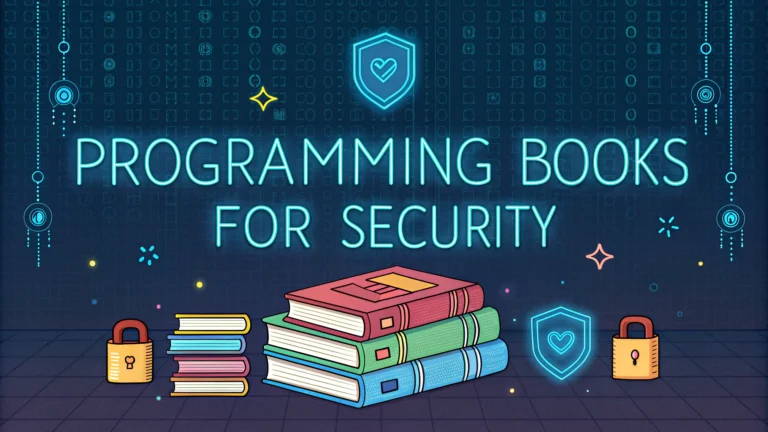
This guide presents the most useful programming books for building security testing and penetration testing skills.
Essential Programming Languages for Security Testing
- Python – Primary language for security testing and tool development
- JavaScript – Web application security testing
- C – Understanding low-level system operations
- Ruby – Popular for exploitation frameworks
- PowerShell – Windows system testing and automation
Top Python Books for Security Testing
- Black Hat Python by Justin Seitz – Focuses on offensive security tools
- Violent Python by TJ O’Connor – Covers penetration testing fundamentals
- Python for Cybersecurity by Nick Stringer – Teaches automation for security tasks
Web Security Programming Books
- The Web Application Hacker’s Handbook – Deep dive into web security programming
- Web Security for Developers by Malcolm McDonald – Practical security coding techniques
- JavaScript for Hackers by Gareth Heyes – Exploit development with JavaScript
Low-Level Programming Resources
- Hacking: The Art of Exploitation by Jon Erickson – C programming for security
- Practical Binary Analysis by Dennis Andriesse – Understanding program internals
- Gray Hat C# by Brandon Perry – Windows security programming
Automation and Scripting Books
- PowerShell for Pentesters by Benjamin Caudill – Windows testing automation
- Automate the Boring Stuff with Python by Al Sweigart – Task automation basics
- Ruby for Pentesters by Georgia Weidman – Metasploit development
Online Learning Resources
- Offensive Security – Professional security programming courses
- Pentester Academy – Programming for security testing
- Hack The Box – Hands-on programming challenges
Getting Started with Security Programming
Start with Python as your first security programming language.
Focus on understanding basic programming concepts before moving to security-specific applications.
Practice by writing simple security tools and scripts to automate repetitive tasks.
Next Steps for Security Programming
- Join security programming communities on Discord and IRC
- Contribute to open-source security tools
- Practice on CTF (Capture The Flag) challenges
- Build a portfolio of security tools and scripts
Advanced Security Programming Concepts
- Buffer overflow exploitation
- Reverse engineering techniques
- Malware analysis programming
- Network protocol manipulation
- Exploit development frameworks
Security Code Testing Tools
- Static Analysis Tools – Code review automation
- Dynamic Analysis Tools – Runtime security testing
- Fuzzing Frameworks – Automated vulnerability discovery
- Web Proxies – HTTP traffic manipulation
Building Your Security Programming Lab
- Set up virtual machines for testing
- Install necessary development tools
- Configure isolated network environments
- Implement logging and monitoring
- Maintain separate testing environments
Programming Best Practices for Security
- Always validate input data
- Implement proper error handling
- Use secure coding standards
- Regular code security audits
- Keep dependencies updated
Mastering Security Programming Skills
Focus on continuous learning and practical application of programming skills in security testing.
Stay updated with latest security vulnerabilities and programming techniques.
Combine multiple programming languages to create comprehensive security testing solutions.
Remember that ethical considerations and legal compliance are essential in security programming.
FAQs
- What are the essential programming books for beginners in penetration testing?
Black Hat Python by Justin Seitz and Tim Arnold, and Violent Python by TJ O’Connor are fundamental books that teach Python programming specifically for security testing and exploitation. - Do I need to learn assembly language for penetration testing?
Yes, books like “Practical Reverse Engineering” by Bruce Dang and “Hacking: The Art of Exploitation” by Jon Erickson are crucial for understanding low-level programming and exploitation techniques. - Which programming language should I start with for penetration testing?
Python is the recommended starting point, followed by C. “Learn Python 3 the Hard Way” by Zed Shaw and “C Programming for Hackers and Pentesters” by Cameron Buchanan are excellent resources. - What are the best books for web application security testing?
“The Web Application Hacker’s Handbook” by Dafydd Stuttard and “Real-World Bug Hunting” by Peter Yaworski provide comprehensive coverage of web security programming concepts. - Are there any books specifically focused on exploit development?
“The Shellcoder’s Handbook” by Chris Anley and “A Bug Hunter’s Diary” by Tobias Klein are essential for learning exploit development and vulnerability research. - What books cover malware analysis and reverse engineering?
“Practical Malware Analysis” by Michael Sikorski and “Reversing: Secrets of Reverse Engineering” by Eldad Eilam are authoritative resources for understanding malicious code. - Which books teach network programming for security testing?
“Network Security Tools” by Nitesh Dhanjani and “Network Programming with Go” by Jan Newmarch cover essential network programming concepts for security testing. - Are there any books that focus on mobile application security testing?
“Android Hacker’s Handbook” by Joshua J. Drake and “iOS Application Security” by David Thiel provide detailed guidance on mobile security testing and development. - What books cover buffer overflow exploitation?
“Buffer Overflow Attacks” by James C. Foster and “Gray Hat Hacking” by Allen Harper offer detailed explanations of buffer overflow vulnerabilities and exploitation. - Which books teach scripting for automation in penetration testing?
“Automate the Boring Stuff with Python” by Al Sweigart and “Wicked Cool Shell Scripts” by Dave Taylor help learn automation for security testing tasks.